An ancestral castle, a palace kitchen and a refused imperial crown reveal a king whose architectural imagination met the political demands of his century.
Life
1795–1861
Known for
King & architectural patron
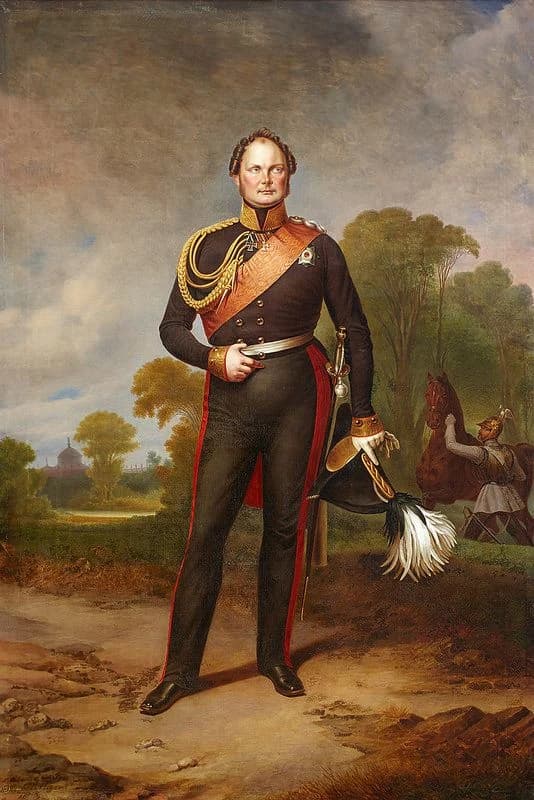
Friedrich Wilhelm IV, painted by Franz Krüger in 1844. Prussian Palaces and Gardens Foundation Berlin-Brandenburg.
In 1819 a crown prince visited the ruined castle of his dynasty. Decades later he returned to that memory in a letter and set a rebuilding project in motion. Hohenzollern Castle is one route into his life; the question of who could legitimately offer him a crown is another.
Prussia in the 19th century
A life in context
Born in Berlin on 15 October 1795, he was the son of Friedrich Wilhelm III and Queen Luise. His youth included Prussia’s defeat and the royal family’s departure from the capital, alongside an education in politics, the military and the arts. In 1823 he married Elisabeth Ludovika of Bavaria; they had no children.
He succeeded his father in June 1840. Often called the romantic on the throne, he commissioned Gothic Revival castles as well as classical and Italianate buildings. His attachment to dynastic and religious authority also brought him into conflict with constitutional and revolutionary movements.
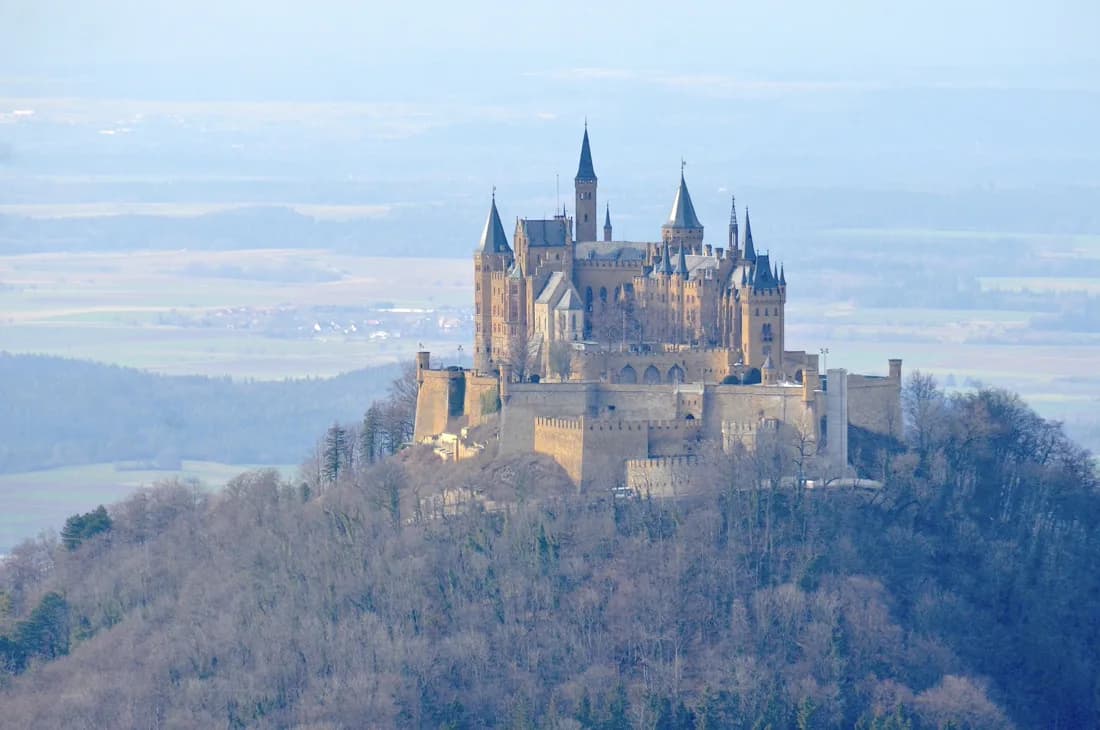
His visit to Hohenzollern’s ruins in 1819 became an enduring reference. In a letter of 1844, quoted by the castle foundation, he recalled the journey and the wish to make the ancestral site habitable again. Rebuilding began in 1850, with Friedrich August Stüler among the designers.
The third castle incorporated the surviving Catholic Michael’s Chapel and added a Protestant Christ Chapel. It also served a military purpose as a Prussian outpost. An evocation of the past could therefore be a statement about a dynasty and an instrument of contemporary presence, rather than only a picturesque private retreat.
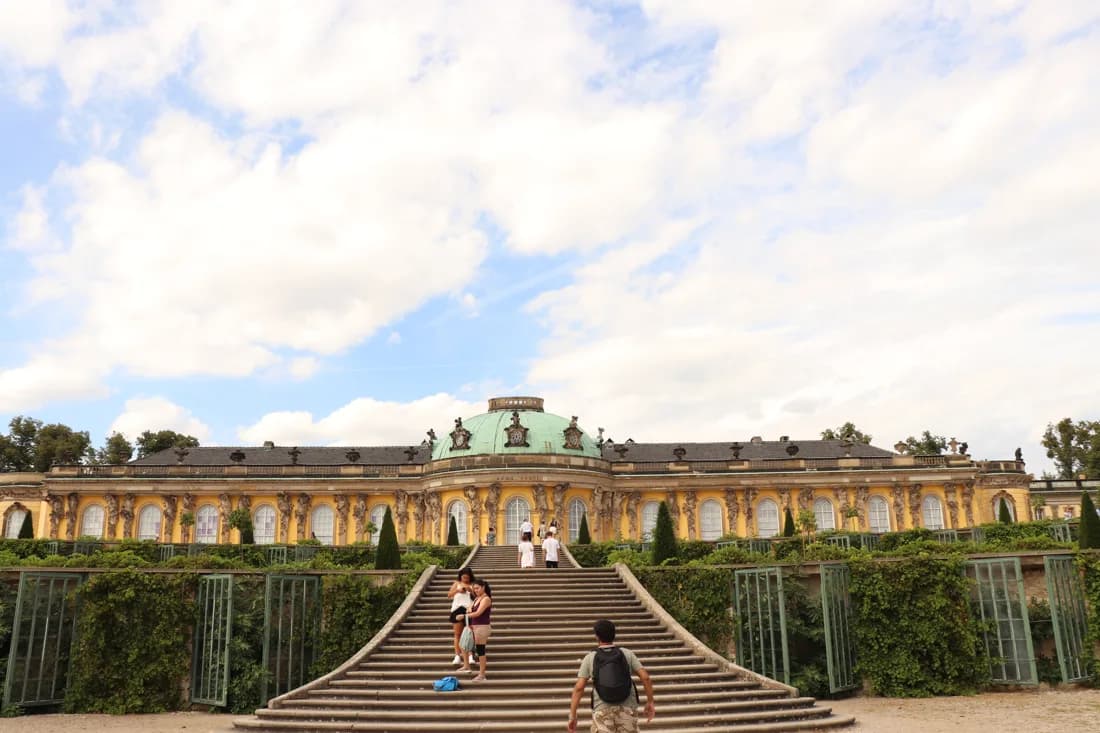
In 1840 he and Queen Elisabeth chose Sanssouci as a summer residence. The palace had been commissioned by Friedrich the Great. Friedrich Wilhelm IV largely respected his ancestor’s principal rooms while enlarging the side wings to accommodate his own household.
The west wing housed court attendants in Second Rococo surroundings; the east contained kitchens, a bakery and service rooms. The surviving cooking range brings 19th-century equipment and the labour behind court life into view. Respect for an inherited palace did not prevent changes to the machinery of everyday living.
Charlottenhof came to the crown-princely couple as a gift from his father in 1825. Karl Friedrich Schinkel and Peter Joseph Lenné transformed the estate into a classical summer residence and garden. Rooms, porticoes, terraces and water were conceived together.
The Orangerieschloss, built from 1851 to 1864, drew on Italian Renaissance villas and palaces. Its central residence and long wintering halls for plants belonged to a larger scheme realised only in part. The king contributed sketches and ideas, but architects and gardeners translated them into buildings and landscape.
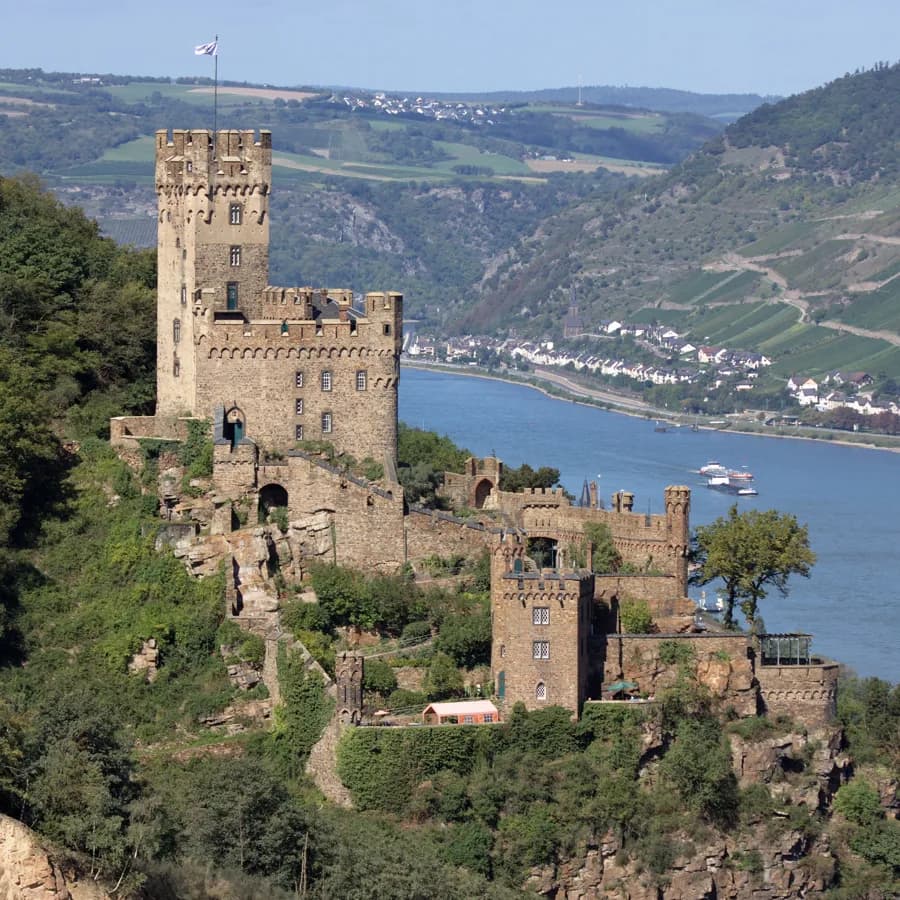
Koblenz gave the ruins of Stolzenfels to the crown prince in 1823. Rebuilding began in 1836, with the main palace and gardens completed in 1842. He and the queen stayed there several times: a direct connection of commission and use.
Sooneck was purchased in 1834; in 1842 he and his brothers decided on a private hunting retreat. Revolution, family disagreements, illness and death frustrated the plan. State heritage describes the family as staying only rarely. An intended hunting lodge is not proof of regular royal hunts, nor does rare use mean nobody ever stayed.
The upheavals of March 1848 brought bloodshed in Berlin and royal concessions. Later that year he dissolved the Prussian National Assembly and issued a constitution. The three-class electoral system introduced in 1849 tied political weight to tax payments. Cultural patronage forms only one part of his exercise of power.
The Frankfurt National Assembly elected him emperor on 28 March 1849. He received its delegation on 3 April without committing to acceptance and finally refused on 28 April. The parliamentary offer conflicted with his understanding of legitimate kingship. Hostile remarks about a revolutionary crown survive in private correspondence; they should not be invented as his words to the delegation in the room.
Serious illness ended his active rule; his brother Wilhelm formally assumed the regency on 7 October 1858. Friedrich Wilhelm IV died at Sanssouci on 2 January 1861. A history of that transfer of power does not require a speculative modern diagnosis.
Hohenzollern Castle was inaugurated by his successor in 1867, and the Orangerieschloss was completed after his death. Their surviving forms record work by patrons, successors, architects and craftspeople across many years. The end of one life did not close the building history.
He succeeded on his father’s death on 7 June 1840. Later homage ceremonies must not be mistaken for the beginning of his reign.
Refusal was a process+
The audience on 3 April 1849 and final refusal on 28 April are distinct events. Private letters should not be presented as an eyewitness transcript of the audience.
The king and the architects+
Commissioning, sketching and developing an idea do not make the patron the sole designer. Schinkel, Stüler, Lenné and others had distinct professional roles.
A different Friedrich Wilhelm+
Rheinstein’s purchaser in 1823 was Prince Friedrich Wilhelm Ludwig of Prussia, not this king. Similar names and membership of one dynasty do not establish the same person.
Romanticism and politics+
An artistic label does not explain every decision. His buildings should be read alongside constitutional conflict and the actual exercise of royal power.
Sources & further reading
Based on heritage institutions, museums, academic research and historical documents. Sources are attached to the relevant sections.
 Ancestral castle rebuilt