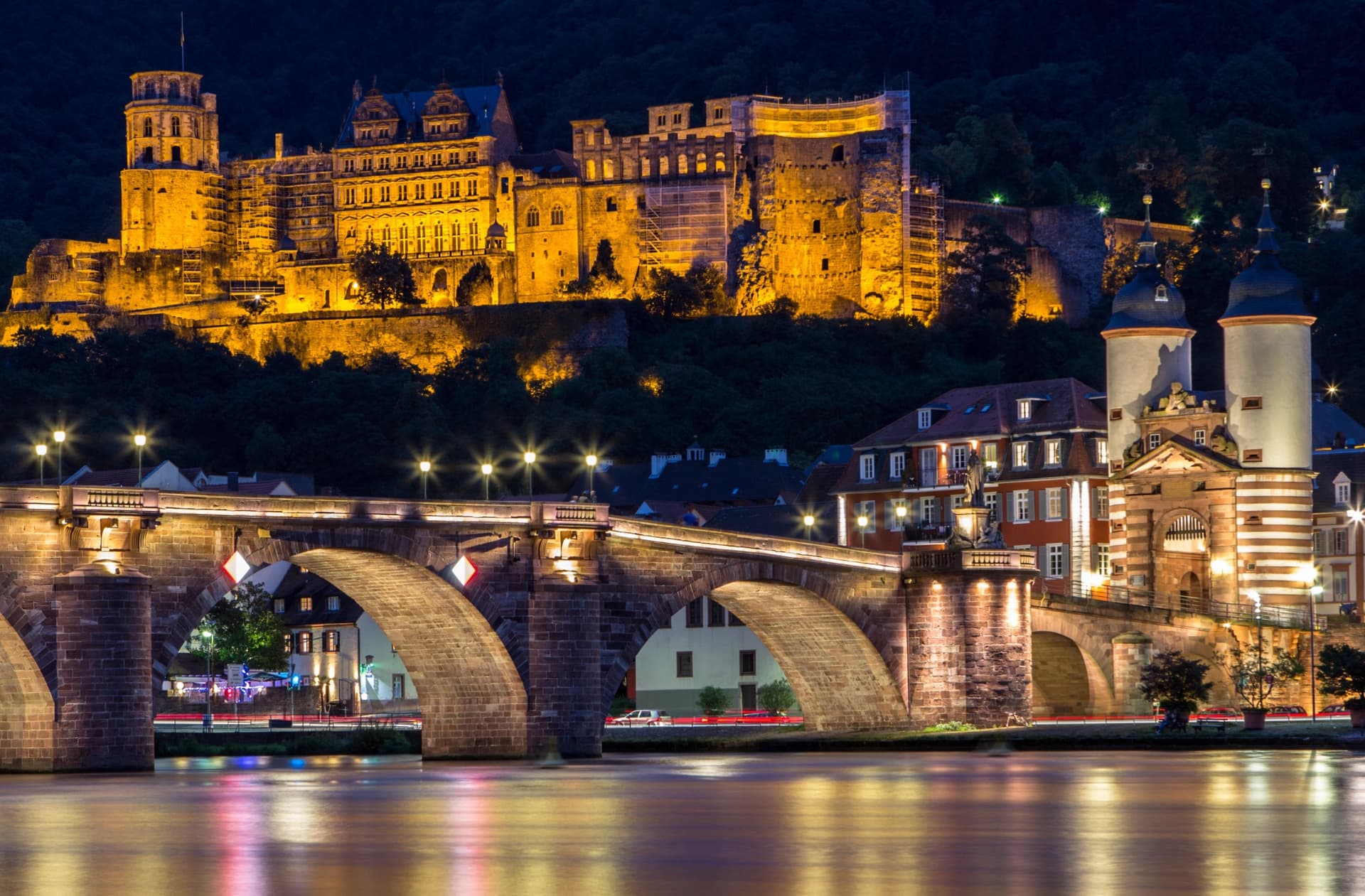
 Birthplace & childhood home
Heidelberg Castle
Part of her childhood was spent here. After her marriage into the French royal family, letters maintained ties with the homeland later devastated by war.
Liselotte of the Palatinate
From Heidelberg to the French court, her correspondence connects family, courtly routine and the destruction of a homeland invoked in dynastic claims.
Heidelberg Castle belonged to Liselotte’s childhood. After her marriage, letters kept her connected to family and places she had left behind. They also reveal the limits of a royal woman’s influence when a claim made through her family became a pretext for war.
The Palatinate and France, 1652–1722
Elisabeth Charlotte was born in Heidelberg on 27 May 1652, the daughter of Elector Karl Ludwig and Charlotte of Hesse-Kassel. In 1671 she married Philippe I, Duke of Orléans, the brother of Louis XIV. At the French court she was addressed as Madame, a title of royal rank rather than the title of queen.
She wrote in German and French about relatives, ceremonies, food, illness and politics. Her letters are valuable testimony, but they come from a participant in courtly hierarchies, not an impartial observer. She died at Saint-Cloud on 8 December 1722.
LI01LI03LI11Heidelberg was a formative home, but not the setting of her entire childhood. Following conflict between her parents, she was entrusted to her aunt Sophie in 1659 and lived in Hannover and at Schloss Iburg. She returned to Heidelberg in 1663. Family care and education connected several residences.
Sophie later became an important correspondent. A childhood relationship thus continued through writing across borders. The surviving letters let us trace attachments, while their descriptions of a lost home also belong to adult recollection. They should not be treated as a daily record of an entirely happy or unhappy childhood.
LI04LI06The marriage of 1671 served dynastic purposes. Before marrying the French king’s brother, Liselotte converted from the Reformed faith to Catholicism. The stages matter: conversion in Metz on 14 November, a proxy marriage on 16 November, and a meeting with her husband at Châlons-sur-Marne on 21 November.
The arrangements changed her religious position, household and courtly role. They should not be rewritten as a romantic first encounter with invented dialogue. Versailles, the Palais-Royal in Paris and Saint-Cloud became different settings of her married life; they were not alternative names for a single palace.
LI01LI03LI08Letters about food and entertainment make palace life tangible. In extracts presented by Heidelberg’s palace administration, hunting is followed by changing clothes, games, theatre, supper and dancing. Personal preferences coexist with the demanding rhythm of courtly company.
These are one woman’s experiences, not evidence of permanent national traits. Surviving rooms also require care: part of the Grand Cabinet in today’s Dauphin’s Apartment at Versailles once included her cabinet, but the rooms were joined in 1693 and redecorated later. The present interior is not her untouched writing room.
LI02LI09Her brother Karl II died without children in 1685. Louis XIV used inheritance claims connected with the Orléans marriage as a pretext within a wider policy of expansion. French forces entered the Palatinate in 1688; Heidelberg suffered major destruction in 1689 and 1693 during the war that lasted until 1697.
The decisions of rulers and armies must remain the subject of the account: Liselotte did not command the destruction because a claim was made through her family. Nor does every damaged wall belong to that campaign. The Ottheinrichsbau, for example, suffered further roof destruction after a lightning strike in 1764.
LI02LI07LI12The Heidelberg University Library edition presents 53 surviving letters: 51 in French and two in German, with 47 addressed to Madame de Ludre. This particular collection complicates the image of a writer communicating only in German with German relatives. Correspondence linked different languages and social settings.
Mail was watched, and gifts and books also helped sustain dynastic information networks. A private letter was therefore not necessarily an unguarded confession. Incoming replies were not preserved as a complete exchange; what survives cannot recreate every answer, intention or stage of the postal journey.
LI03LI05LI06LI08After her husband died in 1701, Liselotte remained in France. In 1715 her son Philippe II became regent for the young Louis XV. She was the regent’s mother, not the regent herself. Saint-Cloud was a favoured residence and the place where she died in 1722.
Her husband had acquired the property in 1658, and several architects and artists shaped it. The palace burned in 1870 and its ruins were later removed. Historical prints, including a 1730 view made after her death, can evoke that setting; a modern garden photograph cannot show a surviving apartment that no longer exists.
LI03LI04LI10LI11CHRONOLOGY
Born in Heidelberg on 27 May.
Lives with aunt Sophie in Hannover and at Schloss Iburg, then returns to Heidelberg.
Converts to Catholicism and marries Philippe I of Orléans.
Three children are born; her eldest son dies in 1676.
Her father dies; her brother becomes elector.
Karl II dies without children.
The War of the Palatine Succession.
Heidelberg suffers major wartime destruction.
Her husband dies.
Her son becomes regent of France.
Dies at Saint-Cloud on 8 December.
PLACES & CONNECTIONS
Each connection has its own story. Building, finding refuge and facing a siege are very different relationships.
HISTORY & MEMORY
About 6,000 letters survive; estimates of her lifetime output vary greatly. The 53 letters in Heidelberg are one collection, not her entire correspondence.
Letters record a writer addressing particular people under particular conditions. Sharp judgments about court figures should not be adopted as neutral character descriptions.
The family connection was used to advance claims. It does not make her the military decision-maker or the person responsible for destroying the castle.
A university biographical summary misplaces her brother’s death in 1688 and her daughter’s birth in 1676. The chronology here follows the corroborated 1685 and 1678 dates.
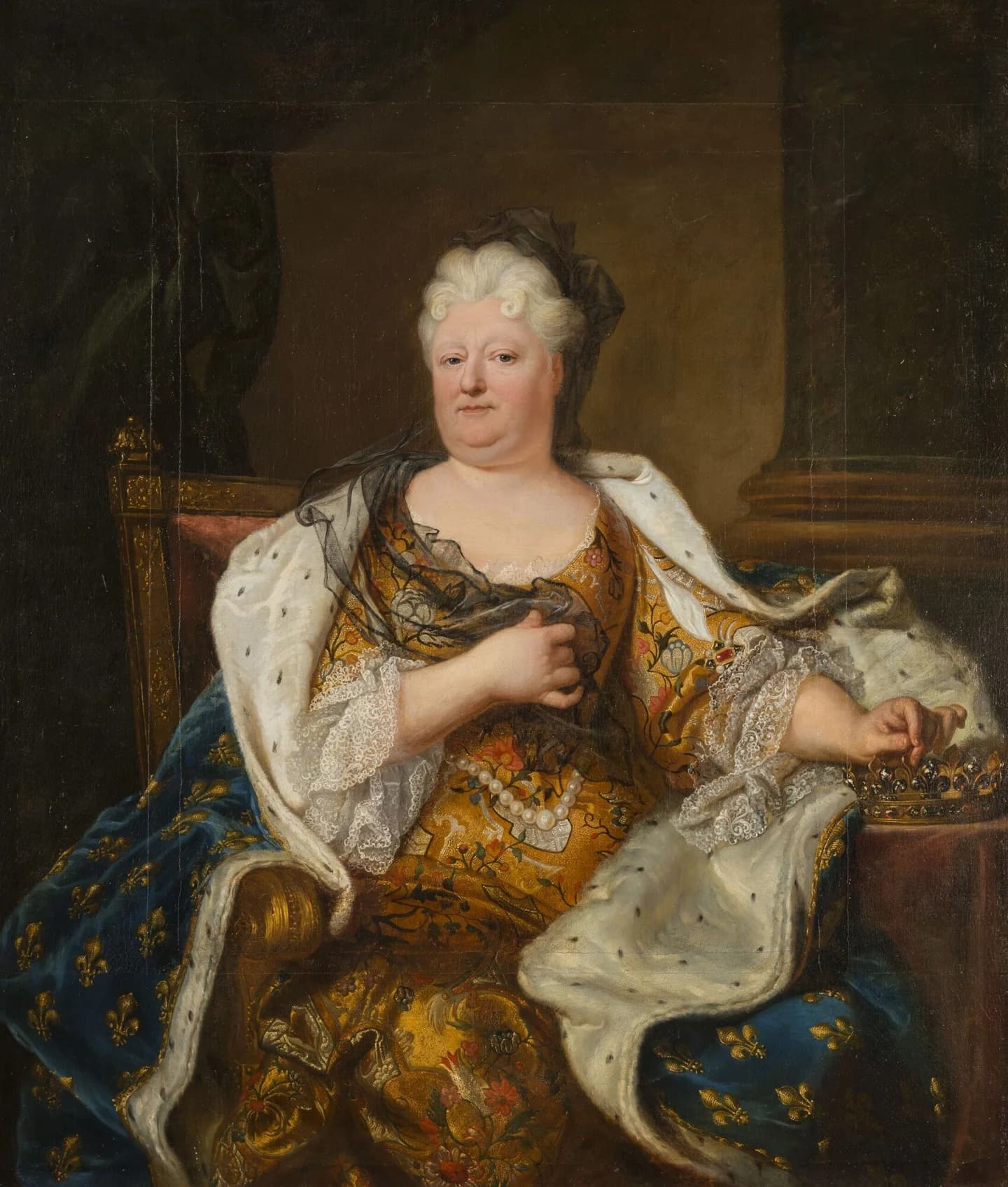
The hero image is a version after Rigaud, around 1713, held at Versailles. It should not be confused with the original portrait in Berlin or a photograph of the sitter.
Based on heritage institutions, museums, academic research and historical documents. Sources are attached to the relevant sections.
Editorial review · 28 October 2026
CONTINUE READING
A kingdom imagined in stone
→1483–1546Behind walls, words travelled
→c. 1285–1354Power was built with more than walls
→1207–1231Beyond the castle walls
→1795–1861A royal past, a changing world
→1811–1864A kingdom built through culture
→1712–1786Music, palaces and the exercise of power
→1797–1848A world wider than the walls
→1670–1733Power made visible
→1687–1753The craft behind a palace staircase
→1709–1758Music and books become places to enter
→